A small amount of water appearing inside during exterior window cleaning is not something to ignore. The most common explanations are a window that is not fully closed, an open vent, a worn seal, a gap around the frame or an existing defect that only becomes obvious when water reaches the outside surface.
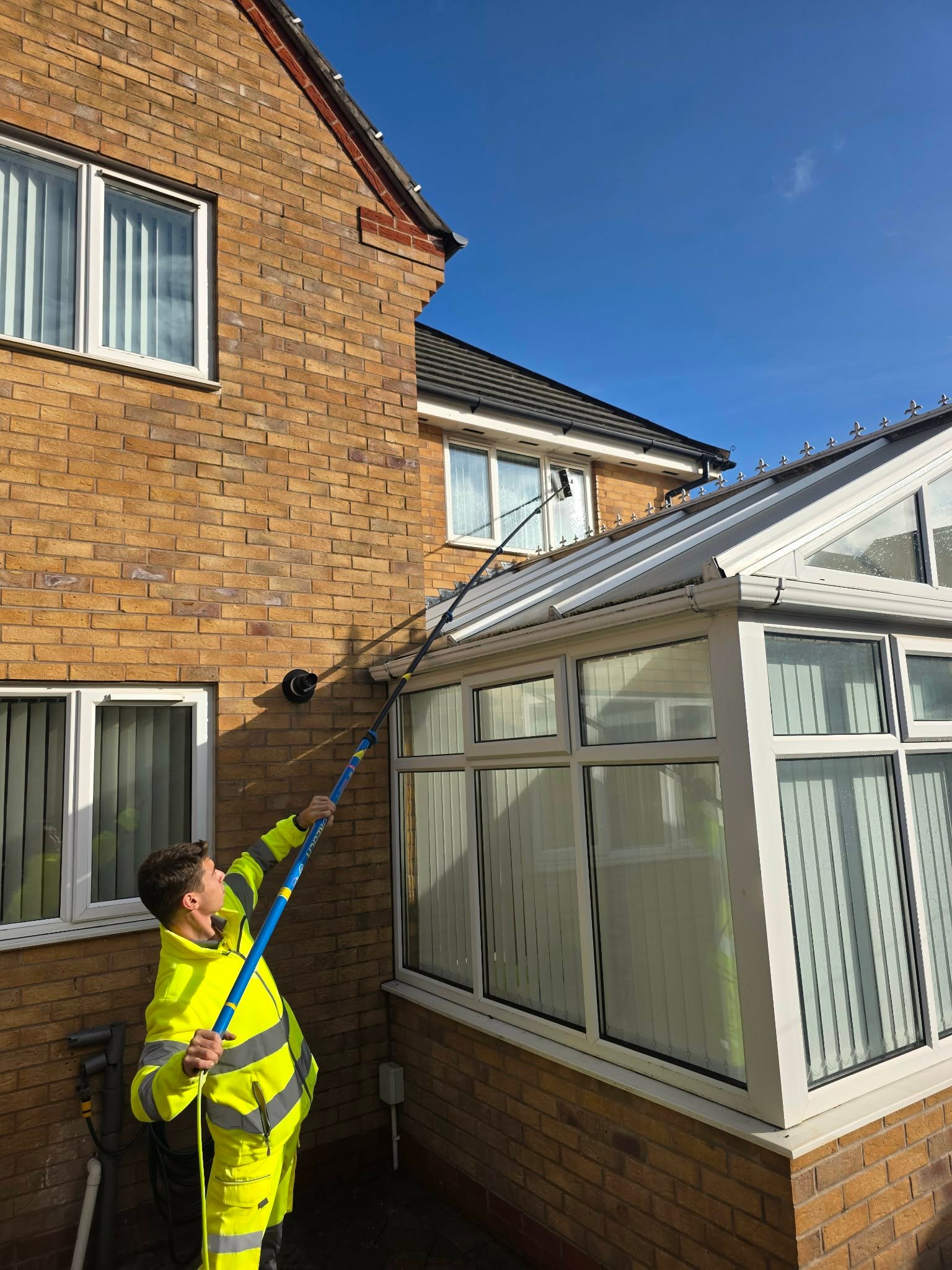
Pure-water window cleaning is not pressure washing. A water-fed pole sends a controlled flow of purified water to a brush, which is used to agitate dirt before the glass is rinsed. Even so, water can find an opening that rain does not regularly reach, especially around upper windows, awkward corners and ageing seals.
First: where is the water actually coming from?
Before assuming the glass or frame is leaking, identify the entry point. A few drops on the inner sill can have a different cause from water running down the wall or appearing between the panes.
| What you notice | Possible explanation | Useful first action |
|---|---|---|
| Drops along the opening edge | The window may not be fully latched or the gasket may not be sealing evenly | Close and lock it, then inspect the rubber seal |
| Water beneath a trickle vent | The vent may be open, damaged or poorly sealed | Close it if suitable and mention it before cleaning |
| Moisture between glass panes | The sealed glazing unit may have failed | Ask a suitable window repair specialist to assess it |
| Water around the frame or plaster | There may be a gap in the frame sealant or surrounding building fabric | Photograph the area and arrange an appropriate inspection |
| A few drops near an open window | The sash may have been slightly ajar | Close it fully before the next visit |
Do not wipe everything away before looking. A quick photograph of the exact location can help distinguish a one-off open-window problem from a defect that needs further attention.
Common reasons water can enter during exterior window cleaning
1. The window is closed but not properly latched
A casement can appear closed from across the room while still sitting slightly away from the seal. This is especially easy to miss with upstairs windows, handles that have not been pulled fully into position or frames that have dropped slightly over time. Closing and locking the window normally pulls it more firmly against the gasket.
Before the cleaner arrives, check the handle rather than relying on appearance alone. Do not force a stiff handle. If it will not close normally, tell the cleaner which window is affected.
2. A suitable vent has been left open
Some homes have trickle vents, night-vent positions or other openings designed for ventilation. Their construction varies. An open vent does not always admit water, but it can provide a route when the outside of the upper frame is being rinsed.
Close suitable vents for the visit where this can be done normally and safely. If a vent must remain open, or if it is loose or damaged, point it out in advance. Never block permanent ventilation required for an appliance or building safety.
3. A rubber gasket or seal is worn
Window gaskets compress every time the opening is closed. With age they can shrink, split, move out of their channel or stop making even contact. Dirt caught on a seal can also prevent a complete fit.
Exterior cleaning may reveal this weakness because water reaches the full perimeter of the glass and frame. That does not automatically mean the cleaning caused the defect. The sensible next step is to record the location, allow the area to dry and have the seal assessed if the problem repeats.
4. There is a gap around the frame
The junction between the window frame and the wall should resist normal weather exposure, but sealant can crack or separate. Water around the reveal, plaster or wall rather than the opening edge may point to the surrounding installation instead of the glass.
This is particularly relevant after building work, replacement windows or movement around an extension. If recent work has taken place, mention it when booking and explain any area already known to leak. The guide to window cleaning after building work in Telford covers other details worth disclosing.
5. Glass, hinges or hardware are damaged
A crack, distorted hinge, failed locking point or damaged frame can affect weather resistance. Even a small defect matters if it prevents the sash from meeting the seal correctly.
Do not ask a window cleaner to test a visibly cracked pane by applying more water. Identify the affected window before work begins so it can be assessed from a safe position and unnecessary wetting can be avoided.
6. Drainage channels are blocked or misunderstood
Many modern frames contain drainage paths designed to direct water back outside. Their layout differs between window systems. Dirt, debris or previous sealant work can affect how water moves, but homeowners should not probe unknown openings with sharp tools.
If water repeatedly collects inside the frame, a window repair professional can check whether the drainage arrangement and seals are functioning as intended.
Is a water-fed pole the same as pressure washing?
No. A water-fed-pole system uses a brush, water flow and rinsing from ground level. It is not intended to blast windows with the concentrated force associated with pressure washing. Effective pure-water cleaning depends on proper agitation, enough rinse water and sensible brush control.
Because the brush reaches the glass and the water runs across the surface, an existing opening can still become apparent. The method cannot make a defective window watertight, and no cleaning method should be used to “test” damaged glazing.
For a fuller explanation of the process, see how pure-water window cleaning works.
What to do before the cleaner arrives
- Close and latch every window in the areas due to be cleaned.
- Close suitable trickle vents where this is normal and safe for the property.
- Check known problem windows for cracked glass, loose gaskets or handles that do not close correctly.
- Move vulnerable items from inner sills beneath a window that has leaked before.
- Tell the cleaner about existing defects rather than waiting to see whether they leak again.
- Send a photograph if the problem is difficult to describe.
- Keep access clear so the cleaner can use a suitable ground position and control the pole accurately.
You do not need to remove curtains, empty every sill or carry out repairs simply because a normal exterior clean is booked. Concentrate on the specific window that has a known issue. The broader pre-visit window-cleaning guide explains the other practical preparations.
What should you tell the window cleaner?
Clear information is more useful than saying only that a window is “a bit old”. Identify the room, floor and position of the affected pane. Explain what happened previously and where the moisture appeared.
Mention any of the following:
- cracked or chipped glass;
- a handle that does not close fully;
- a known leaking seal or frame;
- loose or damaged trickle vents;
- delicate window film or specialist coating;
- recent replacement windows, rendering or building work;
- water previously appearing between panes;
- a window that must not be opened, touched or wetted normally.
This information allows the visit to be planned around the actual condition of the property. It is also helpful where rear access, an extension or a parked vehicle changes the working position.
What to do if water appears during the clean
- Tell the cleaner promptly. Identify the exact window rather than waiting until the whole property is finished.
- Check whether it is fully closed. Do this from inside without leaning outside.
- Move nearby belongings. Protect curtains, electronics and other items on the sill.
- Take clear photographs. Include the entry point and a wider view of the frame.
- Dry the visible water. This makes it easier to see whether more is entering.
- Do not demand a repeat rinse as a test. Further water may worsen an existing leak.
- Arrange repair advice if necessary. Repeated leakage, failed seals, damaged hardware or moisture in the wall needs the appropriate specialist.
Does water inside mean the window cleaner caused damage?
Not necessarily. Timing alone does not establish the cause. Cleaning can expose an existing route that ordinary rainfall has not highlighted, particularly when rain normally approaches from another direction or an overhang shelters part of the frame.
Equally, the incident should not be dismissed. The condition of the glass, seal, closure and surrounding frame should be considered. Good communication helps separate an open-window mistake from a repair issue.
Can the affected window still be cleaned?
That depends on the defect and the available control measures. A slightly open window may only need to be closed correctly. A visibly cracked pane, badly failed seal or frame that cannot shut may need repair before normal cleaning continues.
There is no universal answer for every window type. Share the details before booking so the cleaner can consider the glass, access and known condition. Exterior glass-focused cleaning is available as a one-off visit or on a regular six-weekly round, with a £19 minimum call-out and no automatic first-clean surcharge. See the current window-cleaning prices for the confirmed pricing information.
Quick leak-prevention checklist
- Windows fully closed and latched
- Suitable vents closed
- Known cracks and damaged seals disclosed
- Vulnerable items moved from the affected inner sill
- Rear and side access agreed
- Photographs sent for unusual window layouts or defects
- Children and pets kept away from hoses and the working area
Frequently asked questions
Should I lock my windows before exterior cleaning?
Locking is not always essential, but turning the handle fully into its normal closed position can help the opening sit correctly against the seal. Use the window as designed and do not force faulty hardware.
Can water enter through trickle vents?
It can in some designs or conditions, particularly if the vent is open, loose or damaged. Close suitable vents for the visit and tell the cleaner about any vent that must remain open.
Why does the window leak during cleaning but not when it rains?
Rain direction, roof overhangs and surrounding walls can shelter parts of a frame. Exterior cleaning may wet an area more evenly, revealing an existing gap that normal rain rarely reaches.
Is moisture between the panes caused by exterior cleaning?
Persistent misting or moisture inside a sealed glazing unit usually indicates a problem with that unit rather than surface water on the exterior glass. A suitable window specialist can assess it.
Should a cracked window be cleaned?
Disclose it before the visit. The crack, glass type and access need to be considered; a damaged pane should not be treated as an ordinary sound window.
Do I need to be home?
Not always, but if a window has leaked before, being available or providing clear instructions can help. Read the guide on whether you need to be home for window cleaning.
Arrange exterior window cleaning in Telford
If one of your windows has a known leak, send a photograph and a short explanation before booking. Use the contact page or call the telephone number displayed on the website. Clear information makes it easier to plan a safe, practical exterior clean without making assumptions about the condition of the window.