Leaded and Georgian-style windows can often be cleaned with a water-fed pole, but the condition and construction of the window matter more than its appearance. Sound decorative leading, secure glazing bars and intact seals may be suitable for careful pure-water cleaning. Loose lead strips, cracked panes, failing putty or damaged seals need to be identified before work begins.
The safest answer is not a blanket yes or no. A modern double-glazed unit with decorative strips is very different from an older window made from many individual panes. This guide explains what Telford homeowners should check, what to tell the cleaner and what to expect from an exterior glass-focused visit.
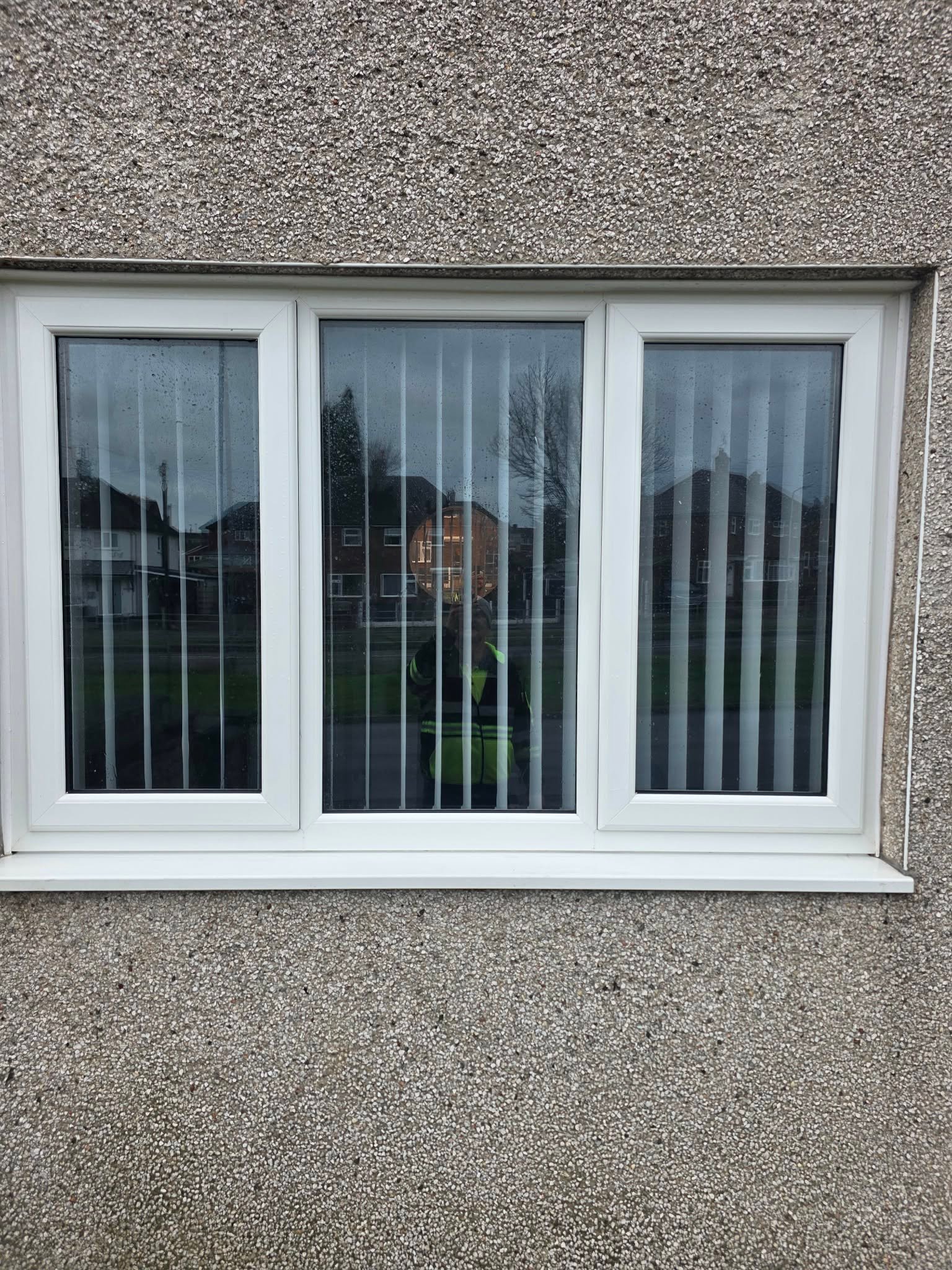
What type of leaded or Georgian window do you have?
People often use “leaded window” and “Georgian window” for several different designs. Identifying the construction helps the cleaner assess the glass, seals and decorative elements correctly.
| Window type | How it is usually constructed | What needs checking |
|---|---|---|
| Applied lead strips | Decorative strips fixed to the surface of one pane | Loose edges, lifting sections and previous repairs |
| Internal Georgian bars | Bars sealed between the panes of a double-glazed unit | Condition of the exterior glass and perimeter seals |
| External clip-on glazing bars | Decorative bars attached over the outside of the glass | Loose clips, movement and gaps trapping debris |
| True divided-light windows | Several small panes held by timber, metal, putty or beads | Cracked panes, failing putty, loose beads and fragile paint |
| Traditional stained or leaded glass | Pieces of glass joined by lead cames | Movement, bowed panels, cracked glass and deteriorated cement |
If you are unsure, send a close photograph and a wider photograph showing the entire window. Do not pull at lead strips or glazing bars to test them.
How a water-fed pole cleans decorative windows
A water-fed pole carries purified water to a brush controlled from ground level. The brush loosens surface dirt and the glass is rinsed so the remaining pure water can dry naturally. It is not the same as pressure washing, and it should not rely on blasting the window.
On a suitable decorative window, careful technique matters:
- the brush should be controlled rather than forced against raised details;
- the operator needs a useful pole angle and clear ground position;
- loose dirt must be agitated without catching vulnerable strips or edges;
- enough rinse water is needed to carry contamination away from small panes and bars;
- the condition of putty, seals, paint and leading must be respected.
For the general process, see how pure-water window cleaning works. The method can be effective, but no tool makes damaged glazing safe to clean in the ordinary way.
When water-fed-pole cleaning may be suitable
A decorative window may be a reasonable candidate when the glass is intact, the frame closes correctly and the decorative parts are firmly attached. Modern windows with Georgian bars sealed between the panes are often straightforward from the exterior because the outside surface is still one continuous pane.
Applied lead strips can also be cleaned when they are secure and in sound condition. The cleaner still needs to work carefully around raised edges, especially if previous sun exposure or age has weakened the adhesive.
True divided-light windows require more attention because they contain more joints, edges and potential weak points. Suitability depends on the actual condition of the small panes, putty, beads and surrounding frame rather than the style alone.
Warning signs to disclose before booking
Tell the cleaner about any visible or known defect. A small problem that seems cosmetic can become relevant when a brush and flowing water reach the full exterior surface.
- Lead strips lifting at the corners or ends
- Decorative bars that move when the window is opened or closed
- Cracked, chipped or previously repaired panes
- Bowed or visibly flexible stained-glass panels
- Missing, crumbling or cracked glazing putty
- Flaking paint on timber glazing bars or frames
- Water previously entering around the glass or frame
- Misting or moisture between double-glazed panes
- Delicate coatings, films or hand-painted details
- Recent replacement, repair, painting or building work
A photograph is particularly useful where an upper window cannot be inspected closely from the ground. If water has previously entered the property, read why water can come inside during exterior window cleaning before arranging the visit.
Applied lead versus real leaded glass
Applied decorative strips
Applied strips sit on the face of a larger pane. They create the appearance of separate sections but do not normally form the structural joints between pieces of glass. Their main vulnerability is adhesion: an edge may lift, a joint may separate or an old repair may fail.
Do not assume that a strip is secure because it looks flat from inside. Exterior photographs taken in good daylight can reveal lifting edges or missing sections.
Traditional leaded panels
Traditional panels use lead cames to join individual pieces of glass. Age, movement and previous repairs can affect their stability. A panel that bows, rattles or contains cracked pieces should be assessed appropriately before routine cleaning.
The correct approach may be gentle cleaning, avoiding a particular section or postponing until repair. No universal promise should be made without seeing the window.
Georgian bars between the panes
When decorative bars are enclosed inside a sealed unit, the cleaner works on the continuous outer pane rather than touching the bars. The relevant checks are then the exterior glass, frame, seals and access. Moisture between the panes is a glazing-unit issue; exterior surface cleaning does not remove it.
Can pure water leave marks around lead strips or glazing bars?
Pure water is used because it contains very little dissolved mineral content, but the final appearance also depends on what is already on the window. Dirt, oxidised material, deteriorating sealant or residue around raised details can be released during cleaning.
On a first clean, accumulated contamination may need more agitation and rinsing than on a regular maintenance visit. That does not mean every first visit is identical, and it does not justify aggressive brushing of fragile details.
If marks appear after drying, their position matters. Spots spread across the pane may have a different cause from a line following a failing strip or seal. The guide to spots after window cleaning explains the broader possibilities.
Access matters as much as the glass
Decorative windows are often found above porches, bays, conservatories or extensions. Even if the glass itself is sound, the cleaner needs a suitable position from which to control the pole without forcing the brush into the window at a poor angle.
Before booking, mention:
- windows above a conservatory, porch or sloping roof;
- deep sills or projecting stonework;
- narrow side paths and locked gates;
- parked cars beneath the affected windows;
- shrubs, pots or light garden furniture restricting the working position;
- shared access or areas used by neighbours.
Send photographs showing the ground and obstacles as well as the window. For difficult upper windows, see the guide to cleaning windows above conservatories and extensions.
What should homeowners do before the visit?
- Inspect from inside and ground level. Look for cracks, lifting strips, loose bars and failing putty without leaning outside.
- Close and latch the windows. Include suitable vents where they can normally and safely be closed.
- Photograph unusual or damaged areas. Take one close image and one showing the full window and access below.
- Move only necessary obstacles. Clear light furniture, pots or bins only where they affect access.
- Explain previous problems. Mention leaks, loose pieces, repairs or marks that have returned after earlier cleaning.
- Keep people and pets away from hoses. This helps maintain a controlled working area.
You do not need to remove intact decorative strips, repaint sound frames or attempt specialist repairs before asking for advice. The useful preparation is accurate information. The full pre-visit checklist for window cleaning covers access, gates and other practical details.
Questions to ask before booking
- Can you assess this type of decorative window from photographs?
- Do you need a clear photograph of the exterior and the access below it?
- Are the requested areas within the exterior glass-focused service?
- Should any visibly damaged pane or loose strip be excluded until repaired?
- Does someone need to be home because of a known defect or access issue?
- What price and payment arrangement applies to this property?
- Would a one-off visit or regular six-weekly cleaning suit the situation?
The confirmed service offers one-off and regular six-weekly exterior window cleaning. The minimum call-out is £19, with no automatic first-clean surcharge. The property, requested work and access still need to be considered when arranging the visit. Check the current prices page for the published pricing information.
Practical suitability checklist
| Condition | Practical next step |
|---|---|
| Modern sealed unit with internal Georgian bars | Check the outer glass, seals and access |
| Secure applied lead strips | Share photos and request careful assessment |
| Lifting or missing decorative strip | Disclose it before cleaning; repair may be sensible first |
| Cracked small pane or failed putty | Avoid treating it as a normal sound window |
| Bowed or unstable traditional leaded panel | Seek appropriate specialist assessment |
| Sound window above an extension | Assess both the glazing and usable pole position |
Frequently asked questions
Will the brush pull decorative lead off the glass?
Sound, firmly attached strips may tolerate careful cleaning, but loose or deteriorated strips can be vulnerable. Their condition should be disclosed before the visit; no cleaner should assume every applied strip is equally secure.
Can you clean Georgian bars that are inside double glazing?
The bars sealed between the panes are not directly accessible during exterior cleaning. The continuous outside pane can be cleaned, but dirt or moisture inside the sealed unit cannot be reached from the exterior.
Is pure water safe for old stained glass?
Age alone does not answer the question. The glass pieces, lead cames, cement, frame and panel stability all matter. Fragile or bowed panels may need specialist assessment before routine exterior cleaning.
Can damaged putty get wet?
Failing putty can admit water or release material. Point it out before cleaning and consider repair rather than asking for an ordinary clean over a known weak joint.
Do I need a first-clean surcharge?
There is no automatic first-clean surcharge. The minimum call-out is £19, while the property, access and requested work need to be considered for the actual arrangement.
Can decorative windows join a regular round?
Regular six-weekly cleaning is available, as is one-off cleaning. Suitability still depends on the condition of the windows and practical access.
Arrange an assessment in Telford
If your home has leaded, stained or Georgian-style windows, use the contact page or call the telephone number displayed on the website. Send a close photograph of the decorative detail, a full view of the window and a picture of the access below it. That gives a far better basis for planning than the description “old leaded windows” on its own.