A mark on a window can be on the exterior surface, the room-facing surface, inside a sealed double-glazed unit or within the glass itself. Exterior window cleaning can deal with ordinary dirt on the outside, but it cannot reach marks trapped between panes or repair scratches, damaged seals or etched glass.
Before booking, a few careful checks can help you describe the problem accurately. This guide explains what to look for, what not to try and when professional exterior window cleaning is likely to be the right next step.
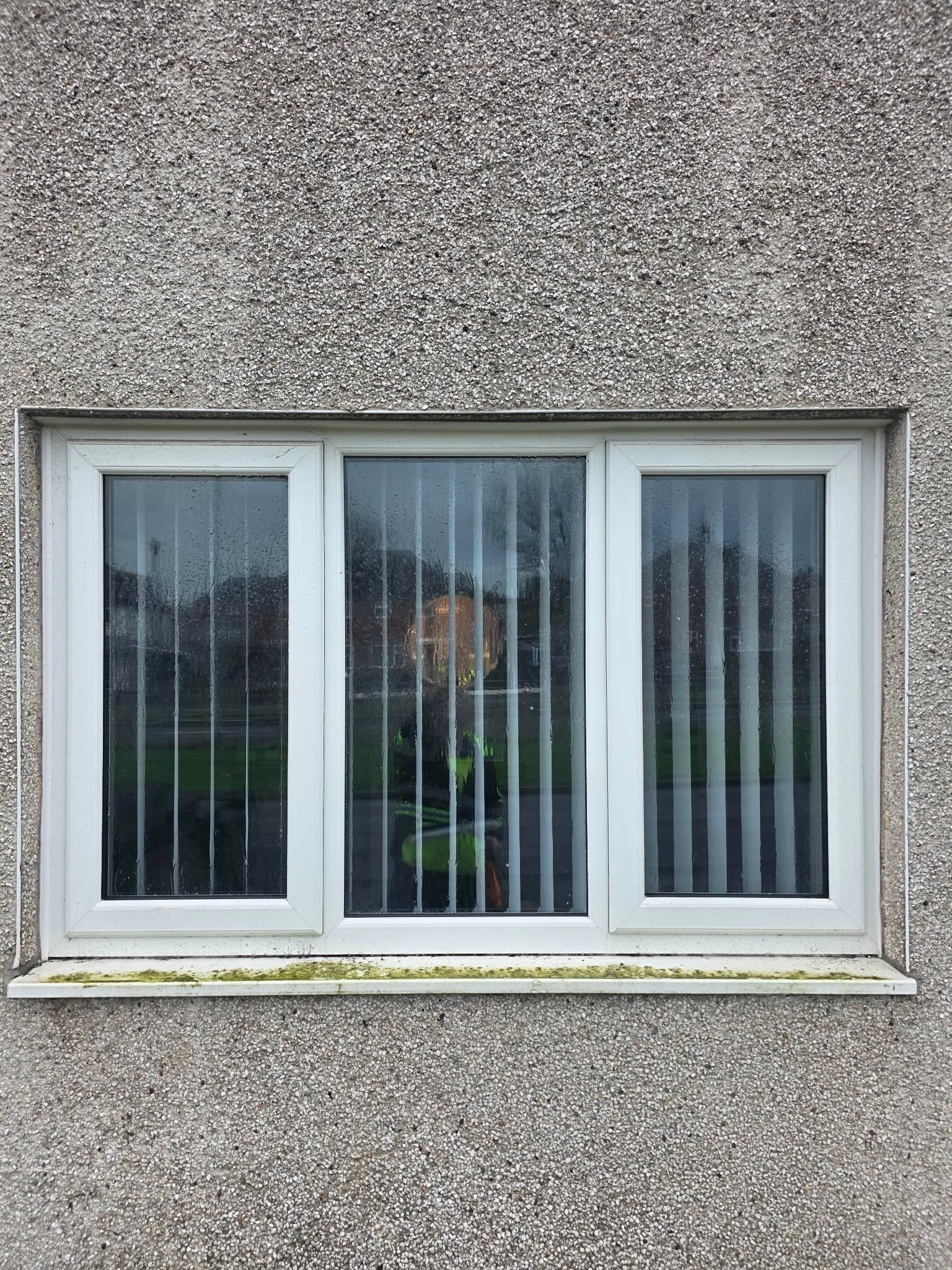
Are the marks on the inside, outside or between the panes?
The quickest answer often comes from changing your viewing angle and checking the same area from both sides. Do not start with a blade, abrasive pad or strong chemical. First identify where the mark appears to sit.
| Where the mark is | Typical clues | Likely next step |
|---|---|---|
| Exterior surface | More visible outdoors; affected by pollen, dust, bird mess, splash marks or building residue | Exterior cleaning may help, depending on whether the contamination is loose or bonded |
| Interior surface | Changes after a careful test wipe on the room side; may be fingerprints, cooking film or condensation residue | Interior cleaning is needed rather than an exterior-only service |
| Between sealed panes | Misting, droplets or a cloudy patch cannot be touched from either side | The sealed glazing unit may need assessment; surface cleaning cannot reach it |
| In or on the glass permanently | Scratch, etching, coating damage or mineral staining remains after ordinary cleaning | Identify the damage or bonded deposit before choosing a remedy |
A mark may have more than one cause. For example, exterior dirt can sit over an older scratch, or room-side condensation can make a failed seal look worse. Treat this table as a practical starting point, not a remote diagnosis.
A safe five-step check before booking
- Look in dry daylight. Reflections and rain can make the position of a mark difficult to judge.
- View it from several angles. Move left and right, then compare the same point from indoors and outdoors where safe access allows.
- Use a reference point. A frame corner, handle or glazing bar helps you locate the exact patch from the other side.
- Test only the accessible indoor surface. If the glass has no delicate film or special coating, gently wipe a small area with a clean, soft, damp microfibre cloth.
- Photograph the result. Take one close image and one wider image showing the whole window and surrounding access.
Never lean out of an upstairs window or climb onto a conservatory, extension or unstable object to touch the outside. The purpose of the check is to gather useful information without creating a fall risk.
Signs the mark is on the exterior surface
Exterior marks often follow the way weather and contamination meet the building. You may see:
- vertical trails below vents, seals or frame joints;
- pollen or dust concentrated near edges and sheltered corners;
- bird droppings with a raised or textured appearance;
- splash marks close to paths, roofs or lower sills;
- mineral deposits where non-purified water has repeatedly dried;
- paint, render, cement or silicone following recent building work.
Ordinary loose dirt is very different from bonded contamination. A Pure-Water Water-Fed Pole system uses a brush to agitate exterior dirt and purified water to rinse it away. That works well for routine maintenance, but it does not mean every substance can be safely removed during a standard exterior clean.
Hardened paint, mortar, render, adhesive, silicone, severe mineral scale and scratches may require a different assessment. Some attempts to remove them can damage coatings or glass. Mention them before the visit rather than assuming that more pressure or a stronger chemical is the answer.
If construction work is involved, read what to check before booking window cleaning after building work.
Signs the mark is on the room-facing surface
Fingerprints, cooking film, smoke residue and condensation marks can all sit on the inside. They may look like failed exterior cleaning because glass is transparent and the mark is viewed through the pane.
A careful indoor test wipe can be useful, but check first for applied window film, tinting or a delicate coating. Do not use abrasive pads, blades or an unknown chemical. If the small test changes or removes the mark, the problem is probably on the room-facing surface.
Window Cleaning Telford is focused on residential exterior glass cleaning. If the mark is inside, an exterior visit cannot remove it. Identifying that before booking saves time and avoids unrealistic expectations.
Signs the mark is between double-glazed panes
Misting or droplets that cannot be touched from either side may be inside the sealed unit. A cloudy area may change with temperature or weather but remain inaccessible to normal cleaning.
This is sometimes associated with a failed or deteriorated seal, although only an appropriate glazing assessment can confirm the cause. Exterior cleaning cannot reach the cavity between sealed panes and should not be presented as a repair for it.
Simple clues to check
- The cloudy patch stays after both accessible surfaces are clean.
- It appears to have depth rather than sitting on one surface.
- Condensation forms inside the unit, not on the room-facing surface.
- The appearance changes with temperature but cannot be wiped away.
If water appears inside the room during an exterior clean, that is a different issue. Open windows, vents, damaged seals or gaps may allow water through. See why water can come inside during exterior window cleaning.
Marks that routine cleaning may not remove
Some marks are on the exterior surface but are no longer ordinary dirt. They may have bonded to, reacted with or physically damaged the glass.
Mineral deposits
Repeated exposure to mineral-rich water can leave a chalky or spotted deposit. Pure water is useful for routine cleaning because it contains extremely low levels of dissolved minerals, but it does not automatically reverse old mineral damage or severe scale.
Scratches
A scratch is physical damage, not surface dirt. It may catch the light differently as you change viewing angle. Normal brushing and rinsing will not repair it.
Etching and chemical damage
Cement, render, harsh chemicals and prolonged mineral deposits can alter the surface. The mark may remain even when loose contamination has been removed.
Coating or window-film damage
Some glazing has applied film or a specialist coating. Peeling, bubbling, hazing or discolouration may relate to that layer rather than ordinary dirt. Tell the cleaner about known films or coatings before work begins.
Residue from frames and seals
Dirt can collect around seals, frame edges and drainage points. When those areas become wet, residue may move onto the glass. Correct brushing and rinsing matter, especially on a first clean, but damaged or deteriorating components may continue to release material.
The guide to spots after window cleaning explains several common drying and contamination causes in more detail.
Why the mark can look different after a clean
Cleaning can reveal damage or staining that was previously hidden beneath general dirt. That does not necessarily mean the clean created the mark.
Once dust and surface grime are removed, an old scratch, mineral deposit, failed seal or patch of etching may become easier to see. Low sun and strong reflections can also make marks more obvious at particular times of day.
This is one reason it is useful to tell the cleaner about a specific concern beforehand. A photograph and a short description allow the problem to be considered separately from routine whole-window cleaning.
What purified water can and cannot do
Window Cleaning Telford prepares its own ultra-pure, extremely low-TDS water before the visit and brings the required water to the property. The customer’s household water supply or outside tap is not used.
The purified water is pumped through the hose and water-fed pole to the brush. Effective cleaning still depends on correct water quality, agitation, flow and rinsing. Pure water is not a universal solvent and cannot repair damaged glass.
| Problem | Can routine pure-water exterior cleaning help? |
|---|---|
| Loose dust and pollen | Often, with proper brushing and rinsing |
| Routine weathering and surface dirt | Often |
| Fresh bird mess | Often, depending on condition and safe access |
| Old hard-water scale | Not always; may be bonded |
| Paint, cement, render or silicone | Not necessarily; disclose before booking |
| Scratch or etching | No; cleaning cannot repair glass damage |
| Misting between sealed panes | No; the cavity is inaccessible |
| Interior fingerprints or film | No; an exterior-only clean cannot reach them |
For more detail on the method, read how pure-water window cleaning works and how window cleaners prepare and carry their water.
What to tell the cleaner when you enquire
- Which window is affected and whether it is upstairs or downstairs.
- Whether the mark changes after a careful indoor wipe.
- Whether it appears between sealed panes.
- How long it has been visible.
- Whether there has been recent painting, rendering or building work.
- Whether the glass has film, tinting, leaded detail or a delicate coating.
- Whether access is blocked by a conservatory, extension, locked gate or parked vehicle.
- Whether the glass is cracked, chipped or otherwise damaged.
Photographs are most useful when one image shows the mark close up and another shows the entire window and access around it. Avoid photographing only a reflection; include the frame so the affected pane can be identified.
What not to do before the visit
- Do not use a metal blade unless you understand the glass and contamination involved.
- Do not scrub coated glass or window film with an abrasive pad.
- Do not mix household chemicals on the pane.
- Do not climb onto a conservatory, extension roof or unstable furniture.
- Do not conceal cracks, damaged seals or recent building contamination.
- Do not assume every visible mark is removable dirt.
A short description before booking is safer and more useful than aggressive DIY testing.
Frequently asked questions about marks on windows
How can I tell which side of the glass a mark is on?
Use a frame corner as a reference, view the mark from several angles and compare it from both sides. If safe and suitable, gently wipe a small area of the accessible indoor surface with a clean, soft, damp cloth.
Can a window cleaner remove cloudy marks between double glazing?
No exterior cleaning method can reach inside a sealed glazing unit. Persistent misting or droplets between panes may need assessment by a glazing specialist.
Will pure water remove every mark?
No. It is effective for routine exterior dirt when used with correct brushing and rinsing, but it cannot repair scratches, failed seals, etching or damage to coatings. Bonded deposits may also remain.
Why do I only see the mark in sunlight?
Low-angle light and reflections can reveal fine scratches, residue or surface variations that are less obvious under flat light. Check the pane at more than one time of day before drawing a conclusion.
Should I clean the inside before booking?
You do not need to clean the whole interior. A small, careful test on an appropriate accessible area may help locate the mark. Avoid this if the pane has delicate film or a specialist coating.
What if I am not sure what the mark is?
Describe it honestly and provide clear photographs. Avoid promising yourself that cleaning will remove it before its location and nature are understood.
Exterior window cleaning in Telford
Window Cleaning Telford provides residential exterior glass cleaning using a Pure-Water Water-Fed Pole system. Regular six-weekly and one-off cleaning are available. The minimum call-out is £19, and there is no automatic first-clean surcharge.
If you have marks on windows and want to know whether exterior cleaning is a sensible next step, use the contact page or telephone enquiry option. Mention any films, damaged glass, failed seals, bonded building residue or difficult access before the visit.
You can also review the confirmed service information on the main Window Cleaning Telford page and the prices page.