Yes, the exterior glass in many patio and bifold doors can be cleaned with a water-fed pole. Their ground-floor position often makes them straightforward to reach, but large panes, low thresholds, recessed openings, delicate films and furniture close to the doors can all affect the job. The right approach is to assess the glass and the surrounding patio together.
If you want to clean patio doors with a water-fed pole at a Telford home, the main questions are practical: can the doors close securely, is there enough space for the cleaner and hose, and are there any coatings, cracks or leaks that need to be disclosed? This guide explains how Pure-Water cleaning works on sliding, French and bifold door glass, what the service does and does not cover, and how to prepare without moving half the garden.
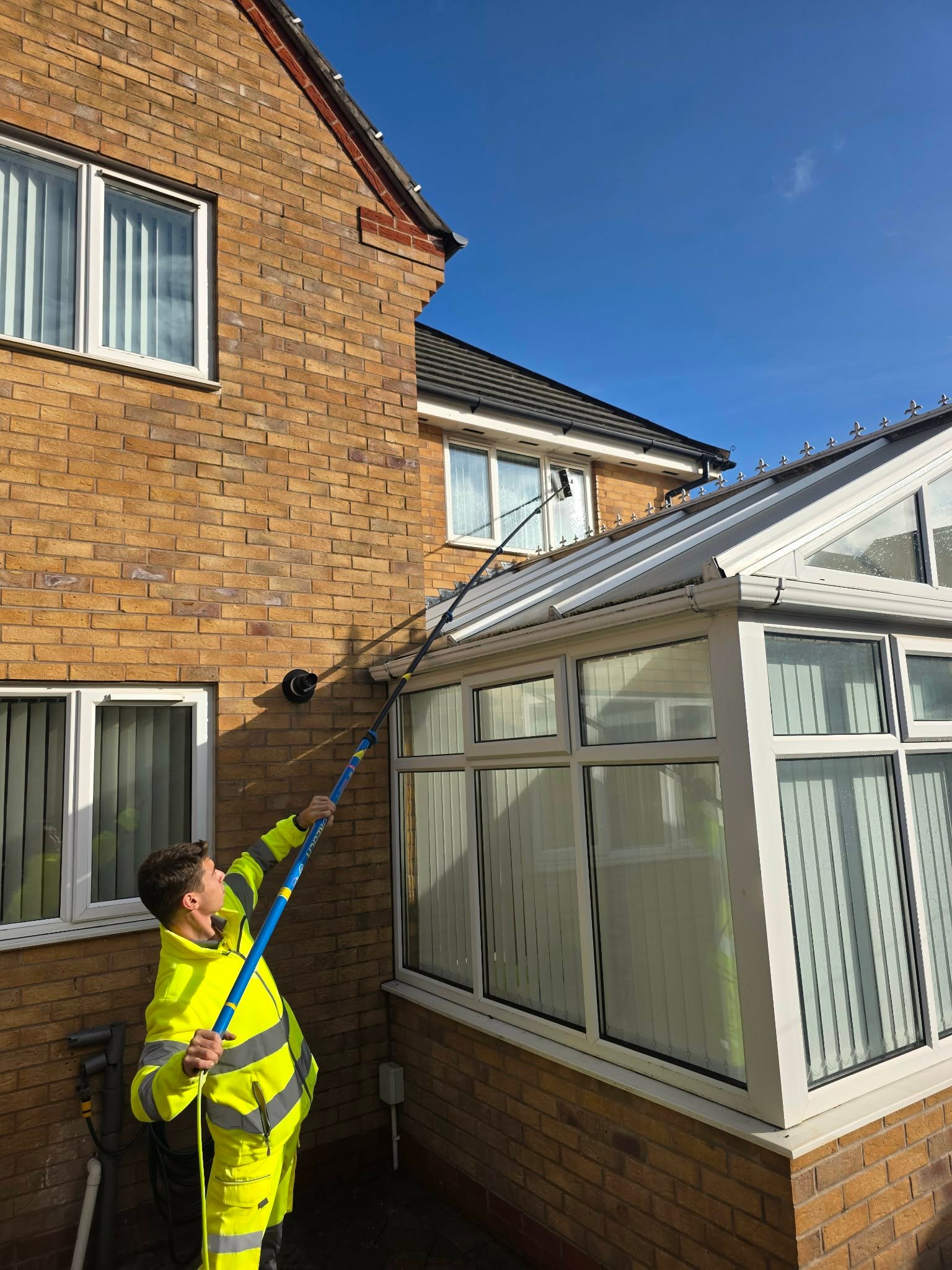
Can patio and bifold doors be cleaned with a water-fed pole?
In many cases, yes. The brush is used on the outside glass while purified water loosens and rinses away ordinary dirt. The panes are then normally left wet to dry naturally. Because patio doors are usually at ground-floor level, the pole does not need to be extended far, but the cleaner still needs room to position the brush and manage the hose safely.
The water is prepared and purified by the window cleaner before the visit, then brought to the property for the water-fed-pole system. The customer’s tap, garden hose and household water supply are not used for the clean. For the full explanation, see how Pure-Water window cleaning works.
Different glazed doors create different cleaning questions
| Door type | What affects the exterior clean | What to mention before booking |
|---|---|---|
| Sliding patio doors | Wide panes, overlapping door sections, low glass edges and recessed frames. | Sticking doors, leaking seals, film, cracks or difficult access across the patio. |
| Bifold doors | Multiple narrow panels, more vertical edges and hinges between glazed sections. | Whether every panel closes securely and whether furniture sits directly outside. |
| French doors | Two opening leaves, central meeting edges and sometimes smaller divided panes. | Loose decorative details, damaged seals or one leaf that does not shut properly. |
| Full-height fixed glass beside a door | A large uninterrupted pane can show interior fingerprints or marks between panes clearly. | Whether the mark is definitely on the exterior surface. |
| Doors beneath a canopy or inside a recess | The overhead projection and side walls may restrict the brush position. | Send a wider photograph showing the whole recess, not only the glass. |
| Glass with applied film or coating | Delicate or ageing material may need condition-aware handling. | Tell the cleaner what was applied, which side it is on and whether it is lifting. |
How Pure-Water cleaning works on large door glass
1. The doors are checked from outside
Before water reaches the glass, obvious cracks, loose details, damaged seals and incomplete closure should be noted. Exterior cleaning cannot repair a faulty door or stop an existing leak. If a door has allowed water inside before, disclose that when booking.
2. The brush loosens exterior dirt
The cleaner guides the brush across the outside surface. Large patio panes require controlled coverage rather than a quick pass through the centre. Edges, lower sections and areas exposed to garden dust may need deliberate attention.
3. Each pane receives a proper rinse
Purified water carries loosened contamination away. On bifold doors, each glazed panel is treated as its own surface, including the panes at the ends of the folded arrangement. The cleaning pattern follows the geometry of the glass rather than assuming one sweep covers the whole doorway.
4. The glass is left to dry naturally
The outside is normally left wet after the rinse. This can look unusual on a large door because the water is easy to see from indoors. Do not wipe the exterior with a household cloth: it can reintroduce minerals or residue. Assess the pane after it has dried. The guide to why windows are left wet after cleaning explains the process in more detail.
Why large panes can look different while drying
Water does not always form identical droplets on every piece of glass. On one patio pane it may sheet across the surface; on the next it may form beads. Previous household products, surface condition, coatings and contamination can change how water behaves. Different wetting patterns do not automatically show that one pane has been missed.
Drying time also varies. A shaded door beneath a canopy may stay wet longer than a sunny pane exposed to airflow. In cool or still weather, the difference can be noticeable. The sensible test is the dry exterior glass, not the temporary pattern of rinse water.
If a mark remains after drying, first work out where it is. Large glazed doors often collect fingerprints on the inside, while condensation or staining can appear between the panes of a failed sealed unit. Exterior cleaning cannot remove either. Use the guide to checking whether marks are inside, outside or between the panes.
What is included—and what should be confirmed?
The service is residential and focused on exterior glass. That distinction matters with patio and bifold doors because the doorway includes much more than glass: tracks, thresholds, hinges, handles, seals, frames, drainage channels and nearby paving.
Do not assume that cleaning the exterior glass automatically includes:
- internal glass or indoor fingerprints;
- door tracks and drainage channels;
- the low threshold or step;
- handles, hinges or locking hardware;
- frames and seals;
- the patio, canopy, wall or surrounding cladding;
- removal of paint, cement, silicone or other bonded building residue.
Ask for the exact scope before booking so the result can be judged against the agreed work. The related article on what is included in an exterior window clean gives a useful list of questions.
Access problems around patio and bifold doors
Ground-floor glass can still be awkward when the approach is crowded or unsafe. The cleaner needs enough space to move the brush, stand securely and route the hose without damaging furniture or creating an avoidable trip risk.
Outdoor furniture against the glass
A dining table, barbecue, storage box or large planter immediately outside the door can block the working position. Move lightweight items only where they genuinely obstruct access. Heavy objects do not need to be dragged across the patio without discussion; a photograph can help determine what is necessary.
Very narrow balconies or enclosed courtyards
A small space may reduce the working angle even though the glass is at ground level relative to the access area. Shared passages, locked gates or neighbour-controlled access should be agreed in advance.
Uneven or slippery paving
Loose items, mossy areas, standing water and dangerous ice can affect footing and hose management. Cold weather alone does not normally stop work because heated purified water and a heated water-fed-pole system are used in winter, but unsafe ground conditions can still require postponement.
Pets using the doorway
Dogs and cats should be kept inside and away from the active work area. A door should not be opened into the pole or hose while the glass is being cleaned. If the patio is the usual route into the garden, plan another arrangement for the short period when work is taking place. The pet-friendly window-cleaning guide covers this in more detail.
Door films, coatings and decorative glass
Some patio and bifold doors have privacy film, solar-control film, decorative strips, leaded patterns or other finishes. Often an applied film is on the internal surface, where exterior cleaning will not touch it, but this should not be assumed. Tell the cleaner about any film or coating and mention peeling, bubbling or previous damage.
Decorative or leaded glass also deserves advance notice. Raised details and ageing material can change the appropriate contact and inspection. If your doors contain this type of pane, read the specific guide to cleaning leaded windows with a water-fed pole.
Can Pure-Water cleaning remove every mark from patio doors?
No. It is effective for ordinary exterior dirt, dust, pollen and loose environmental contamination when the surface is accessible and suitable. It is not a repair process and should not be presented as one.
| What you can see | Likely question | Practical next step |
|---|---|---|
| General dullness or loose garden dirt outside | Is it normal exterior soiling? | Exterior Pure-Water cleaning may be appropriate. |
| Fingerprints visible from indoors | Are they on the internal face? | Check from both sides; this service is exterior glass-focused. |
| Cloudiness that does not change when either surface is wiped | Could it be between the panes? | Exterior cleaning cannot repair a failed sealed unit. |
| Paint, cement or silicone after building work | Is it bonded contamination? | Disclose it before booking; do not assume a standard clean will remove it. |
| Scratches, chips or cracks | Is the glass damaged rather than dirty? | Report the condition before cleaning and arrange repair advice separately if needed. |
| Mineral-looking marks after the pane dries | Are they old deposits or a current drying issue? | Allow the rinse to dry fully, then describe or photograph the remaining mark. |
For recent renovations, use the checklist for window cleaning after building work. Specialist removal and ordinary exterior cleaning are not interchangeable.
First clean versus six-weekly maintenance
Patio doors can show dirt quickly because people use them frequently and gardens place dust, pollen and splashback close to the glass. A first clean after a long gap may need more brushing and rinsing than a maintained pane. That does not mean every first visit is identical or that every mark will be removable.
Window Cleaning Telford offers both one-off and regular six-weekly exterior cleaning. There is no automatic first-clean surcharge, although the property, access and agreed scope still need an accurate assessment. If you are choosing between the two options, read one-off versus regular window cleaning in Telford.
How to prepare patio and bifold doors
- Close and secure every door panel. Check that sliding and bifold sections are fully seated rather than slightly open.
- Move lightweight obstructions. Clear chairs, small pots, toys or ornaments only where they block the glass or working position.
- Keep pets and children inside. Prevent anyone opening the door into the equipment during the clean.
- Remove fragile decorations. Take down temporary items attached to the exterior glass if they could be damaged by water or brush contact.
- Report damage and films. Mention cracks, leaks, loose seals, decorative details, window film and peeling coatings before arrival.
- Arrange access. Unlock the relevant gate and explain any shared or restricted route to the rear patio.
- Do not pre-wash the glass. Household sprays are unnecessary and may leave residue that changes how water behaves.
You do not need to supply water, buy cleaning products or move heavy fixed furniture without agreement. For the rest of the property, use the complete pre-visit checklist.
Useful photographs to send before booking
For an accurate access discussion, take:
- one straight-on photograph showing all door panels;
- one wider view showing the patio, furniture and route to the doors;
- one side angle if the doors are recessed or beneath a canopy;
- a close-up of any crack, film, decorative detail or bonded contamination;
- a photograph of the gate or narrow access route if it may restrict equipment.
A wide view is usually more useful than a close-up of dirt. It helps the cleaner understand where to stand, how to route the hose and whether anything genuinely needs moving.
Questions to ask before booking
- Is every exterior patio or bifold door pane included in the agreed clean?
- Are frames, seals, tracks and thresholds outside the glass-focused service?
- Should any furniture or planter be moved before arrival?
- Do you need somebody at home, or is agreed exterior access enough?
- Should I report privacy film, coatings, cracks or previous leaks?
- Can you assess unusual residue from a photograph?
- Would a one-off or six-weekly clean suit how the doors are used?
- What price and payment arrangement applies to the property?
Frequently asked questions
Can a water-fed pole clean very large patio-door panes?
Often, yes. The important factors are controlled brush contact, a thorough rinse and enough room to work across the full pane. Size alone does not decide suitability.
Can bifold doors be cleaned while folded open?
The panels should normally be closed and secured for exterior cleaning. Open or partly folded doors can expose internal surfaces, hinges and gaps to water, so do not leave them arranged that way unless a different method has been specifically agreed.
Do I need to provide water?
No. Purified water is prepared and brought by the cleaner for the water-fed-pole system. Your household supply and garden tap are not used.
Why are the doors still wet afterwards?
The purified-water rinse is normally left to dry naturally. Avoid wiping the exterior and judge the result when the glass has dried. Temperature, shade and airflow affect how long this takes.
Will exterior cleaning remove fingerprints?
Only if the fingerprints are on the exterior surface and are ordinary removable contamination. Marks on the inside are not part of an exterior glass clean.
Are door tracks and thresholds cleaned too?
Do not assume so. This service is exterior glass-focused. Confirm the exact inclusions before booking, particularly for tracks, frames, seals and thresholds.
Can the doors be cleaned if I am not home?
Potentially, if access is agreed, the doors are securely closed and pets are kept away from the working area. Locked gates or shared access should be arranged in advance.
Can they be cleaned in light rain?
Ordinary rain does not automatically prevent exterior cleaning. Severe wind, dangerous ice or another genuine site hazard can still require postponement. See whether window cleaners work in the rain.
What if water has entered around the door before?
Tell the cleaner before the visit. Existing seal, closure or drainage problems should not be treated as a cleaning issue, and exterior cleaning cannot repair them.
Book patio-door exterior glass cleaning in Telford
Patio and bifold doors are best assessed with a photograph that shows the entire opening and the surrounding access. Mention films, cracks, previous leaks, recent building work and anything that blocks the working position.
For residential window cleaning in Telford, one-off and regular six-weekly exterior cleans are available. The minimum call-out is £19, with no automatic first-clean surcharge. Check the pricing information, then use the contact page or call 07902 932947 to describe the doors and access.