Window Cleaning Telford customers often ask whether professional exterior cleaning can remove bird droppings from windows. The short answer is that ordinary deposits can often be cleaned with careful wetting, agitation and rinsing, but the result depends on how long the mark has been present, the condition of the glass and whether the contamination has bonded to or damaged the surface.
Bird droppings should not be treated like loose dust. They can dry hard, contain grit and sit in corners, on sills or around frames. Scraping at a dry mark with the wrong tool can create a greater problem than the original stain. This guide explains what a Telford homeowner should do, what to tell the cleaner and what a professional exterior clean can realistically achieve.
Can professional window cleaning remove bird droppings?
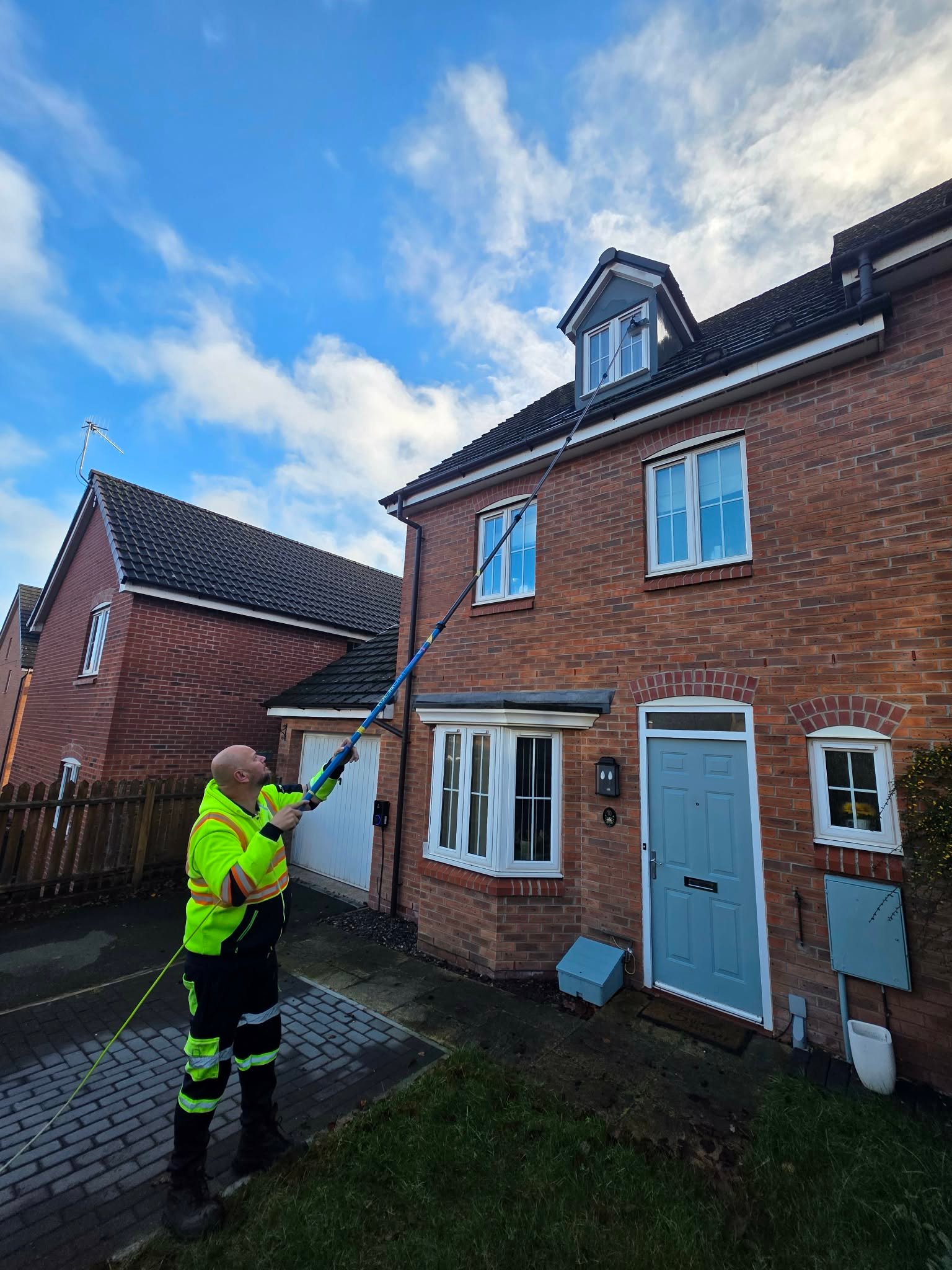
Fresh or ordinary bird droppings on accessible exterior glass can often be removed during a suitable professional clean. A pure-water, water-fed-pole system applies water while the brush agitates the surface, followed by a thorough rinse. The water helps soften the deposit before it is worked away, which is safer than rubbing a dry, gritty mark across the pane.
However, no responsible answer should promise that every visible mark will disappear. A patch that looks like dirt may be bonded contamination, mineral residue, staining, a damaged coating or etched glass. If the glass has already been physically affected, cleaning can remove surface contamination without reversing permanent damage. This distinction is particularly important with older panes, delicate films and coated glass.
What should you do before the window cleaner arrives?
You do not need to scrub the affected glass first. In fact, aggressive DIY work can make assessment more difficult. The most useful preparation is to identify the affected windows and give clear information when requesting exterior window cleaning in Telford.
- Take a clear photograph. Include one close view of the mark and one wider view showing the whole window and access below it.
- Say how long it has been there. A recent deposit and a mark that has baked onto the glass for months may need different expectations.
- Mention films or coatings. Tell the cleaner about privacy film, solar-control film, decorative coatings or any manufacturer’s care instructions.
- Point out damage. Cracks, failed seals, loose beading or scratches should be disclosed before cleaning starts.
- Explain access. Mention conservatories, extensions, narrow paths, locked gates, deep sills, parked vehicles or anything beneath the window.
If this is your first visit, read what happens on a first window clean in Telford. First cleans can take more work than regular maintenance because older deposits and dirt around the edges have had longer to accumulate.
Why soaking and agitation matter
Pure-water window cleaning is not simply a matter of spraying water at glass. Useful results depend on contact time, brush agitation, rinsing, water flow and the way the particular pane behaves. A dried deposit may need to be wetted and worked carefully rather than attacked with pressure or a dry abrasive.
The water-fed-pole method allows many exterior windows to be cleaned from ground level where access and site conditions make that suitable. The brush loosens surface dirt, and purified water rinses it away. The pane may be left wet and allowed to dry naturally; this is a normal part of the method. For a fuller explanation, see how pure-water window cleaning works.
When might a mark remain after cleaning?
A remaining mark does not automatically mean the window was missed. Several different problems can look similar from inside the house:
- Bonded contamination: material that has attached firmly to the surface rather than sitting loosely on it.
- Mineral deposits: residue left by hard water or repeated splashing from another source.
- Etching or surface damage: a permanent change to the glass that cleaning cannot undo.
- Failed seals: moisture or misting between panes, which exterior cleaning cannot reach.
- Coating damage: marks within or beneath a film or specialist surface treatment.
- Internal contamination: a mark on the room side of the pane rather than the exterior.
If spots are visible after the glass dries, compare the location with the original deposit and inspect from more than one angle. The separate guide to spots after window cleaning explains other possible causes without assuming that every spot has the same explanation.
What should you avoid doing yourself?
A common mistake is trying to remove a dry deposit with a household blade, rough sponge, wire wool or abrasive cleaner. Some professional restoration techniques use specialist tools, but that does not make every blade or abrasive safe for every pane. Glass type, coatings, trapped grit, tool condition and technique all matter.
Avoid leaning from an upstairs window or climbing onto an extension roof to reach the mark. A small patch of dirt is not worth creating a fall risk. Also avoid applying an unknown chemical and leaving it to dry, especially if the runoff could reach frames, seals, plants or painted surfaces.
Bird droppings on windows above conservatories or extensions
The contamination may be simple while the access is not. A window above a conservatory, porch or single-storey extension needs to be considered as part of the whole property. The cleaner needs to assess reach, pole angle, obstacles, footing and the route taken by hoses. It is better to mention the obstacle when booking than discover it after arrival.
Read the dedicated guide to windows above conservatories and extensions. A photograph is particularly helpful here because it shows both the affected pane and the structure below it.
How regular cleaning can help
Regular six-weekly exterior cleaning reduces the time that ordinary dirt and fresh deposits remain on accessible glass. It also gives repeated opportunities to notice a developing access problem or a mark that does not behave like normal surface contamination. That does not mean every future deposit is guaranteed to vanish, but maintenance is generally more predictable than waiting until several types of dirt have built up.
A one-off clean is also available when you need a single visit. The right choice depends on whether the bird problem is occasional or repeated, your property access and how you want the exterior glass maintained. You can compare the options in the guide to one-off and regular window cleaning in Telford.
Questions to ask before booking
- Is the affected pane reachable with the normal water-fed-pole setup?
- Should I send photographs of the mark and the access below it?
- Does the booking cover exterior glass only?
- Is there anything about a film, coating, crack or failed seal that should be disclosed?
- Does someone need to be home, or can access be agreed beforehand?
- What is the price and payment arrangement for my property?
- Would a one-off clean or regular six-weekly service better suit the situation?
Window Cleaning Telford focuses on exterior glass cleaning using a pure-water, water-fed-pole method. The minimum call-out is £20, and there is no automatic first-clean surcharge. Property details, the extent of contamination and access still need to be considered when arranging the visit. Check the current prices page rather than relying on a guessed example.
What the mark may mean
| What you can see | Possible explanation | Useful next step |
|---|---|---|
| Raised, dried material | Surface contamination | Send a photograph and avoid dry scraping |
| White or cloudy outline | Mineral residue, staining or surface change | Explain how long it has been present |
| Mist between two panes | Possible failed sealed unit | Understand that exterior cleaning cannot reach between panes |
| Mark beneath a film | Film or coating issue | Disclose the film and any care instructions |
Quick checklist for bird droppings on exterior glass
- Do not scrape the dry deposit with an improvised blade.
- Photograph the mark and the full window.
- Show any conservatory, extension, narrow path or locked gate.
- Disclose cracks, leaking seals, films and specialist coatings.
- Keep children and pets away from working areas and hoses.
- Move only light, easily movable obstructions where access actually requires it.
- Agree gate, rear access and parking arrangements before the visit.
- Allow pure-water-cleaned glass to dry naturally before judging the final appearance.
Frequently asked questions
Will one clean definitely remove every bird-dropping mark?
No universal guarantee is sensible. Ordinary surface deposits can often be removed, but staining, bonded contamination, coating damage or etched glass may remain even after the loose material has gone.
Should I soften the mark before the cleaner arrives?
Usually, the best first step is to leave it alone and send a photograph. Do not apply an unknown chemical or abrasive. If any preparation is useful for your particular pane, agree it before the visit.
Can the window be cleaned if I am not at home?
Possibly, if the relevant exterior glass is accessible and any gates or rear access have been agreed. See the guide to whether you need to be home for window cleaning.
Why is the glass left wet?
With a purified-water system, rinsed glass is commonly left to dry naturally. Avoid wiping it immediately with an ordinary cloth, which can reintroduce residue. Drying results can still be affected by remaining contamination, frames, seals and the condition of the pane.
Can a water-fed pole reach every window?
No method suits every property. Height, obstacles, pole angle, ground conditions and public or shared access all affect what is safe and practical. Mention difficult windows and send photographs before booking.
Ask about exterior window cleaning in Telford
If bird droppings or another stubborn mark is affecting your exterior glass, use the contact page or WhatsApp to send the property details, photographs and access information. That allows the affected pane and the route to it to be considered before a visit is arranged.