Yes — exterior windows can be cleaned through the winter. At Window Cleaning Telford, we use heated purified water and the entire water-fed-pole system is heated, which helps us keep the system working reliably in cold conditions.
That means cold weather on its own does not stop us from cleaning windows. We can continue working through typical winter conditions in Telford, while still assessing the property for genuine safety issues such as dangerous ice, severe wind or unsafe access.
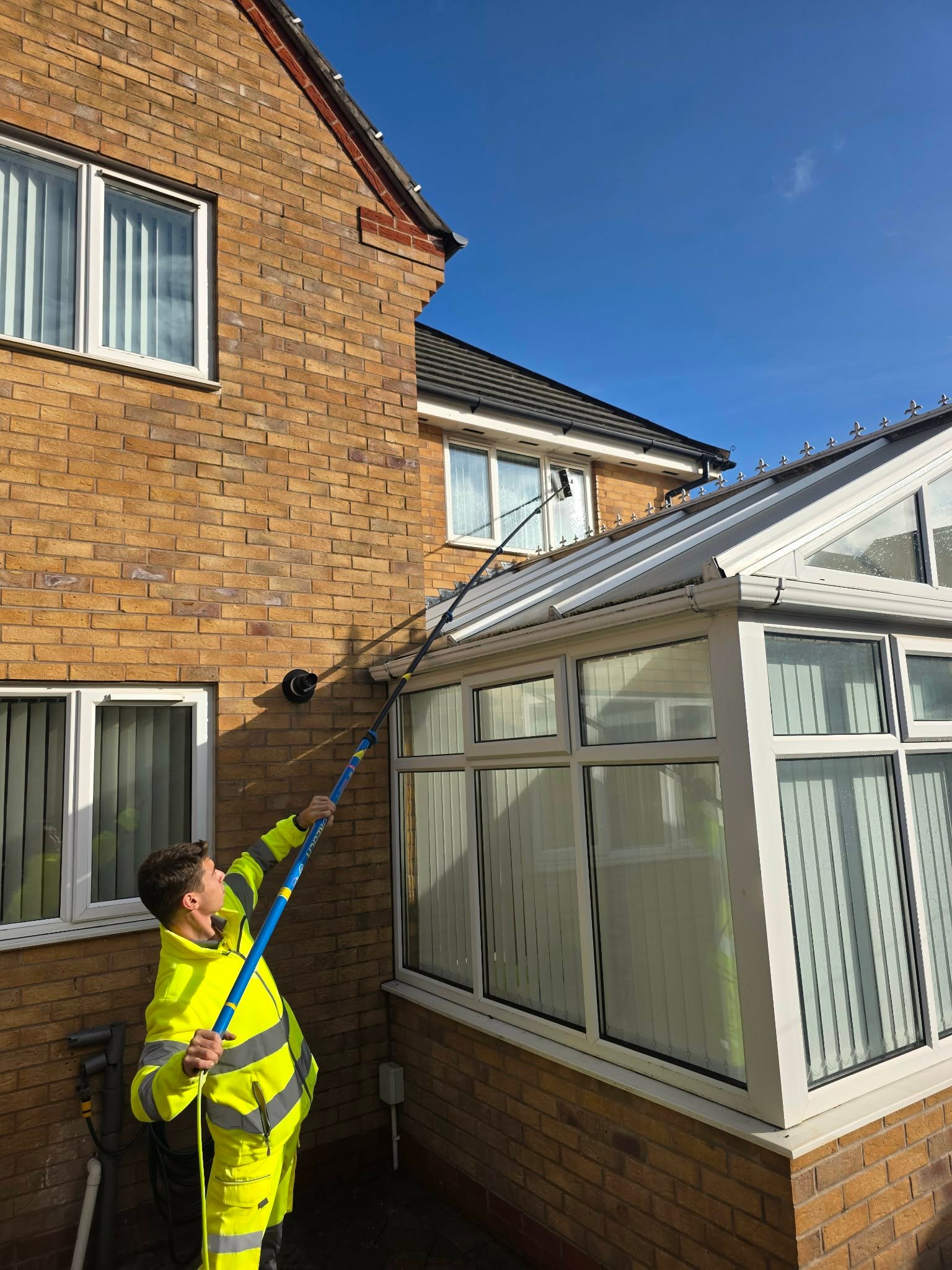
Can exterior windows be cleaned when it is cold?
Yes. Our winter setup is specifically designed to keep us working in cold conditions. We use heated pure water, and the system itself is heated rather than relying on an unheated tank, hose and pole setup.
The cleaning process still uses controlled water flow, brush agitation and a thorough purified-water rinse. The heated system reduces the problems that cold temperatures can cause inside the equipment and helps us continue cleaning when an ordinary unheated system may struggle. The final decision at a property is still based on safe access and ground conditions rather than temperature alone.
Temperature is only one part of the decision
Two homes in Telford can face different conditions at the same time. One may have a sheltered, level front path in sunshine; another may have shaded paving, a steep drive and a side passage that remains icy. The surface underfoot and the route taken by the hose can matter as much as the air temperature.
Before a cold-weather visit, useful checks include:
- Is frost or black ice visible on the drive, path or steps?
- Are shaded side passages colder than the front of the property?
- Could rinse water flow across a public pavement or shared entrance?
- Is strong wind making a long pole harder to control?
- Are gates, locks or outdoor taps frozen or difficult to operate?
- Are parked cars restricting the safest route to the windows?
This whole-property assessment is especially important where rear access is narrow or where the windows sit above a porch, extension or conservatory. The separate guide to windows above conservatories and extensions explains why access beneath the glass matters.
How our heated pure-water system helps in winter
Pure-water cleaning is more than spraying water at a pane. The brush needs to loosen dirt, the flow needs to carry contamination away, and the glass needs a suitable rinse. During winter, our purified water is heated and the whole system is kept heated, helping the equipment continue to operate consistently in cold weather.
This is particularly useful for regular six-weekly customers because winter does not automatically mean the cleaning round has to stop. Once the glass has been cleaned and rinsed, it is normally left to dry naturally. The guide to how pure-water window cleaning works explains the scrub, rinse and natural-drying process in more detail.
When would we still postpone?
Because our purified water and the whole system are heated, cold temperature by itself is not normally a reason to cancel. We can work through typical winter weather. A visit would only need to be reconsidered where the actual site conditions create a genuine safety or access problem, for example:
- Runoff freezes on the ground. Water creating ice on a path, drive or public area introduces an avoidable slip risk.
- The working surface is already icy. Safe footing is essential even when the windows themselves are reachable from the ground.
- Water is freezing on the glass or frames. The normal cleaning and rinsing process may not work as intended.
- Wind affects pole control. Cold weather combined with strong gusts can make exposed upper windows unsuitable.
- Access cannot be made safe. A frozen gate, steep drive, unlit passage or obstructed route may be the real problem.
So the distinction is important: winter weather does not stop the service, but unsafe site conditions can. The heated system is there to keep the cleaning equipment working in the cold; it does not override basic safety around ice, severe wind or unsafe access.
What homeowners can do before a winter visit
You do not need to prepare the glass or apply a cleaning product. The most helpful actions concern access and communication:
- Check the paths, steps and side access for frost or ice.
- Move light, easily movable obstructions only where they block access.
- Arrange locked-gate and rear-access details in advance.
- Keep children and pets away from hoses and the working area.
- Close windows and suitable vents before exterior cleaning begins.
- Mention any cracked glass, failed seals, delicate films or coatings.
- Tell the cleaner about a shaded path that regularly freezes.
- Keep the area beneath difficult windows clear where reasonably possible.
Do not pour boiling water over frozen glass or frames. Sudden temperature differences can be unhelpful for glass and surrounding materials, and the water may refreeze on the ground. Avoid applying household chemicals simply to make the visit possible; discuss the conditions instead.
For a broader preparation list, see what to know before exterior window cleaning.
Winter marks that are not ordinary dirt
Cold months can make several different issues more noticeable. Condensation on the inside, misting between sealed panes and exterior dirt are not the same problem. Exterior cleaning can address suitable contamination on the outside surface, but it cannot remove moisture trapped between panes.
Likewise, a cloudy patch may be mineral residue, a damaged coating or a seal problem rather than loose dirt. It is helpful to identify whether the mark appears on the exterior, interior or between the panes before assuming a clean will fix it.
| What you notice | Possible explanation | What to do before booking |
|---|---|---|
| Loose dirt on the outer surface | Normal exterior contamination | Send the property and access details |
| Mist between two panes | Possible sealed-unit failure | Understand exterior cleaning cannot reach it |
| Water freezing on the path | Cold surface and runoff risk | Report the conditions before the visit |
| Cloudy or etched-looking patch | Residue, coating issue or surface damage | Send a clear close-up photograph |
First cleans and regular maintenance in winter
A first clean may require more work than a regular maintenance visit, particularly where deposits have accumulated around edges or on glass that has not been cleaned for a long time. Cold conditions can make it even more important to set realistic expectations rather than assuming every visit is identical.
Regular six-weekly cleaning is available, as is one-off exterior window cleaning. A regular schedule may reduce the amount of ordinary buildup present at each visit, but it does not remove the need to assess ice, access and weather on the day. Compare the choices in one-off versus regular window cleaning.
Does rain or winter weather undo the clean?
Rain itself is not automatically dirty. Marks after wet weather are more likely to depend on contamination already present on the glass, frames, seals or nearby surfaces. Wind can also carry fresh dirt onto recently cleaned windows.
The fuller explanation is available in does rain make windows dirty after cleaning? The useful point for winter bookings is that drizzle and dangerous frozen runoff are different issues and should not be treated as the same decision.
Winter window-cleaning checklist
- Look for frost, ice and slippery shaded areas.
- Check rear and side access before the visit.
- Keep gates operable and agree access arrangements.
- Move vehicles only if they obstruct safe access.
- Close windows and appropriate vents.
- Keep pets and children away from hoses.
- Report cracked panes, films, coatings and failed seals.
- Send photographs of difficult windows or icy approaches.
- Allow purified-water-cleaned glass to dry naturally.
- Accept postponement if the actual conditions are unsafe.
Frequently asked questions
Is there one fixed temperature below which you stop cleaning?
No. We use heated purified water and a fully heated system, so cold temperature alone does not set a fixed cut-off point. We assess the actual property conditions instead, particularly ice, wind and safe access.
Can windows be cleaned while there is frost on the ground?
Possibly, but only if the relevant working and access areas remain safe and the cleaning water will not create additional ice. A frosty lawn and an icy sloping path are not the same situation.
Will my windows take longer to dry in winter?
They may dry more slowly in cold, still conditions. With the pure-water method, the exterior glass is commonly rinsed and left to dry naturally rather than wiped with a household cloth.
Do I need to be home for a cold-weather clean?
Not necessarily, if access and booking arrangements have been agreed. However, unusual conditions such as a frozen gate or icy rear path should be communicated before the visit. Read whether you need to be home for window cleaning.
Is there an extra first-clean fee in winter?
There is no automatic first-clean surcharge. The minimum call-out is £19. The property, access and requested work still need to be considered when arranging the service.
Arrange exterior window cleaning in Telford
If you are considering a winter visit, use the contact page or call the number shown on the website. Include the property details and mention any icy paths, locked gates or difficult windows. You can also review the current pricing information before making an enquiry.