You do not always need to move your car before exterior window cleaning. The practical answer depends on where the vehicle is parked, which windows need cleaning and whether it blocks the safest route for the water-fed pole and hose.
If a car is directly below a window, tight against a side passage or occupying the only useful working position, moving it can make the visit safer and more efficient. If it is well away from the working area, it may not affect the job at all. This Telford homeowner guide explains how to decide before the cleaner arrives.
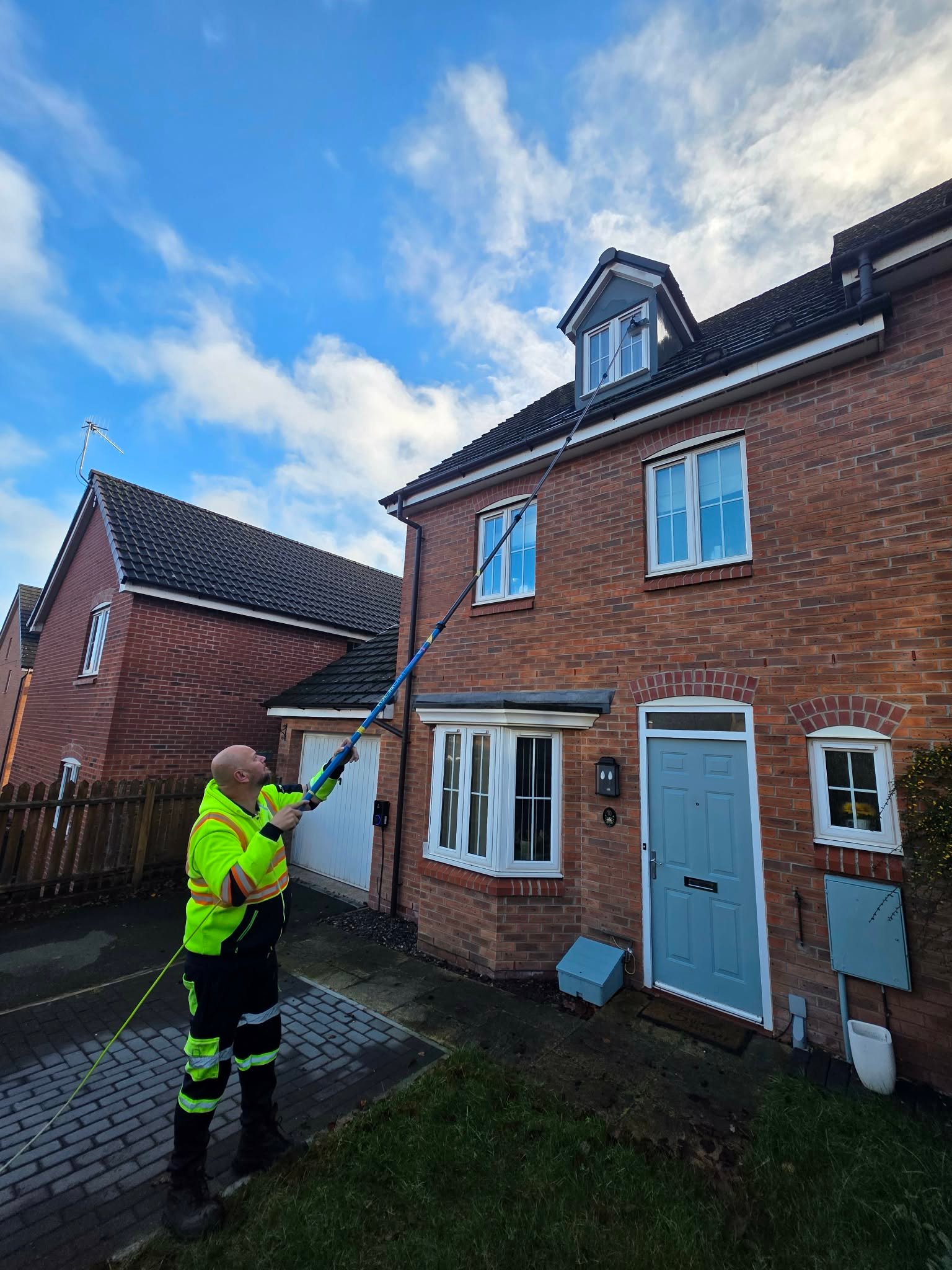
When should you move a car before window cleaning?
Moving the vehicle is useful when it blocks access to the glass or prevents the pole from being used at a suitable angle. A water-fed pole is controlled from the ground, so the area beneath and in front of the window matters. The cleaner needs space to position the pole, guide the brush and manage the hose without leaning over or working around avoidable obstacles.
Consider moving the car when it is:
- parked immediately below ground-floor or upper-floor windows;
- tight against the house, garage or conservatory;
- blocking a narrow side path leading to rear windows;
- covering the safest level working position;
- preventing a gate from opening fully;
- forcing the hose into a busy pedestrian route;
- beneath a window with heavy dirt or bird droppings.
You do not need to move every vehicle simply because a window cleaner is visiting. The aim is to create reasonable access where the vehicle genuinely affects the work.
Why the space beneath the window matters
Exterior windows should be considered as part of the whole property. Height is only one factor. A porch, conservatory, deep sill, parked car, hedge, bin store or narrow passage can change the pole angle and the route to the glass.
A vehicle can leave enough room for a person to walk past while still preventing effective pole control. The cleaner may need to stand farther back than expected to reach an upper pane. That is why a photograph showing both the window and the ground below it is more useful than a close-up of the glass alone.
If the window is above an extension or conservatory, read the separate guide to cleaning windows above conservatories and extensions.
Can water or loosened dirt reach the car?
Pure-water cleaning uses water, brush agitation and rinsing. Water can run from the glass and frames, and loosened surface dirt may move with it. Wind can also carry light spray beyond the immediate pane. For that reason, a car parked directly below the working area is not the best arrangement where it can reasonably be moved.
This does not mean that every nearby vehicle will be soaked or damaged. It means that clear space reduces unnecessary exposure and lets the cleaner work without treating the car as another obstacle. If the vehicle cannot be moved, explain this before the booking rather than assuming it will not matter.
What if the car cannot be moved?
There may be a genuine reason: the vehicle is not running, the owner is away, parking is restricted or there is nowhere else nearby. The correct response is communication, not improvisation.
- Send a photograph. Show the vehicle, affected windows and available ground space.
- Explain whether the car will remain there. Do this before the visit if possible.
- Identify another access route. A rear gate or wider side path may make the vehicle irrelevant.
- Keep the keys available if practical. This can prevent a small access issue from stopping part of the visit.
- Accept that some windows may not be safely accessible. No one should climb over or lean equipment on the vehicle.
A professional assessment may show that the car does not actually obstruct the job. Equally, it may show that one section should wait until the vehicle can be moved. The decision should follow the real layout of the property.
Parking arrangements for a window-cleaning visit
The cleaner’s vehicle and equipment also need practical access. This does not mean a customer must guarantee a private parking space, but unusual parking restrictions are worth mentioning when booking. A busy shared court, permit-only road or very long distance from the property can affect how hoses and equipment are managed.
Useful information includes:
- whether the drive is shared;
- whether access can be blocked by neighbours’ vehicles;
- whether the property is on a narrow or busy road;
- whether the rear is reached through a communal area;
- whether gates open onto the drive;
- whether a visitor space or legal roadside parking is normally available.
Do not reserve a dangerous or illegal space. Simply provide the facts so the visit can be planned sensibly.
How hoses change the access question
A water-fed-pole system uses hoses to carry purified water to the brush. The hose route should be considered around cars, gates, steps, pets, children and shared walkways. A car can pinch a hose, hide it from view or force it across a route used by other people.
Before the visit, keep children and pets away from the working area and avoid driving over a hose. If you need to leave while the clean is taking place, tell the cleaner before moving the vehicle. Sudden vehicle movement around equipment is an avoidable risk.
For a full pre-visit list, see what to know before exterior window cleaning.
Common parking situations
| Parking situation | Likely effect | Useful action |
|---|---|---|
| Car well away from the house | May not affect access | Leave it unless another route is blocked |
| Car directly below upper windows | Can restrict pole angle and receive runoff | Move it where reasonably possible |
| Car blocking the side gate | Rear windows may be inaccessible | Move it or agree another access route |
| Immobile vehicle on the drive | Access depends on remaining space | Send photographs before booking |
| Shared parking court | Vehicle positions may change | Explain the layout and access limits |
Do you need to stay home to move the car?
Not necessarily. If the relevant areas are clear and access has been agreed, exterior window cleaning may be possible while you are out. The important point is to make any vehicle or gate arrangements beforehand.
If the car may need moving but nobody will be home, move it before leaving or discuss the exact position in advance. The guide to whether you need to be home for window cleaning explains the wider access question.
First clean versus regular visits
A first clean may involve more accumulated dirt than a regular maintenance visit. Providing clear access is particularly helpful where the cleaner needs extra time to agitate and rinse the glass. This does not mean a car must always be moved for every first clean; it means avoidable restrictions are more likely to matter.
For regular six-weekly visits, a simple routine can prevent repeated problems: keep the same working area clear, arrange reliable gate access and avoid parking beneath the most difficult windows on the expected visit day. One-off exterior cleaning is also available when you do not want a regular schedule.
Compare both choices in the one-off versus regular window-cleaning guide.
Car and access checklist before the visit
- Walk around the property and look at the space below each window.
- Move cars that clearly block windows, gates or the safest working position.
- Do not move a vehicle unnecessarily if it is well outside the working area.
- Send photographs when you are unsure.
- Mention shared drives, permits or difficult roadside parking.
- Keep vehicle keys available where practical.
- Do not drive over hoses or move a car without alerting the cleaner.
- Keep children and pets away from the working route.
- Clear light, movable obstacles only where access requires it.
- Agree rear and side access before leaving home.
Frequently asked questions
Must every car be removed from the driveway?
No. Move a vehicle when it materially obstructs access, pole control, a gate or the working position. A car parked well away from the relevant windows may not affect the clean.
Can the cleaner work over my car?
Working over or around a vehicle is not automatically appropriate. The safe and practical answer depends on the available space, pole angle and affected windows. Moving the car is preferable when it sits directly beneath the work.
What if street parking is difficult?
Explain the restriction when booking. You should not park illegally or create another hazard. A photograph of the drive and street position can help clarify the options.
Could purified water damage a car?
The article does not make a universal promise about every vehicle, finish or existing condition. The practical step is to avoid unnecessary runoff or spray by moving a car that is directly below the work when reasonably possible.
Does moving a car change the price?
No automatic pricing rule is being claimed here. The minimum call-out is £19, and the property, requested work and access need to be considered when arranging the visit. See the current prices page.
Arrange exterior window cleaning in Telford
If you are unsure whether a parked car will affect access, use the contact page or call the number shown on the website. Send one photograph of the windows and another showing the drive, gate or side route. That is usually more useful than trying to describe a tight space from memory.